


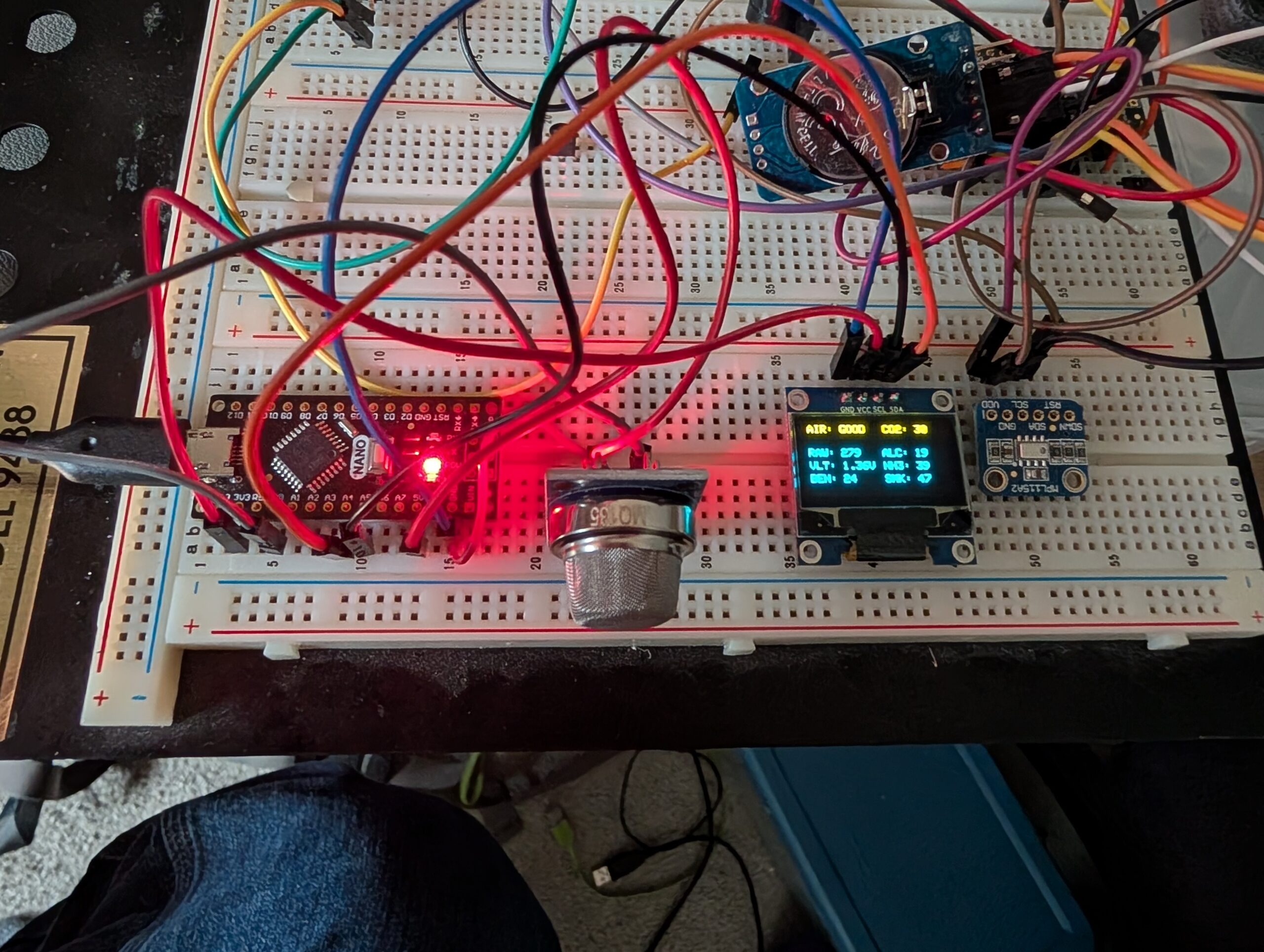
I have worked as a design prototyper for over a decade, adapting as technology continues to evolve. Recently I began exploring artificial intelligence for rapid prototyping, and it has completely changed how I create.
With AI, I no longer need to learn every new coding language or framework just to build something new. A good idea and a clear prompt can generate a strong starting point that I can refine into my own vision. While understanding technology and design still matters, it is now easier than ever to create fun and meaningful projects.
Lately I have been building small daily and weekly experiments using old sensors, microcontrollers, Raspberry Pi boards, and Arduino hardware. In minutes I can turn spare parts into something interactive and creative.
Pwnagotchi Inspired Companion
While building a headless Pwnagotchi with a Raspberry Pi Zero, I was inspired by its playful digital face on the web UI. I decided to create a small robot companion in this style using an Arduino Nano, a 0.96 inch OLED display, and a buzzer.


With the help of AI, I was able to generate working code and clear wiring guidance in just minutes. The result is a small digital companion that cycles randomly through various expressions, sticks its tongue out, shifts between happy and sad moods, and occasionally makes a playful sound.


It is a great starting point, and there is still plenty of room to grow. Next, I plan to add a microphone so it can react in real time to sounds in its environment, making it even more interactive and alive.
Personal Weather Station
I recently built a simple weather station using the ESP32 C3 microcontroller with a 0.42 inch OLED screen. My goal was to create a quick glance display that shows exactly what I want to know about the weather each day.
The screen displays a weather icon for conditions like sunny or rainy, along with the current temperature and the daily high and low. It gives me the basic weather information for the day in seconds on the microcontroller’s display. It was fun designing with such constraints such as this tiny display with limited UI real estate.


I also programmed the device to host its own web server. Anyone on the same network can open a browser and view more detailed weather information, including a seven day forecast and an interactive radar map. This allowed me to include all of the extra weather information I wanted to see that I couldn’t jam into the small OLED display.


It has become a small but useful weather station that I check daily. Next, I plan to improve the web layout and styling to make it even more enjoyable.
Creating New Things Daily
Lately I have been building new projects almost every day. It has become a personal challenge to see what I can create next with the help of AI. What excites me most is how quickly ideas turn into working prototypes. Because of this, I build most of my electronics on a simple breadboard instead of soldering everything permanently. This allows my projects to evolve fast and stay flexible.

This hands on experimentation has also pushed me deeper into learning about artificial intelligence, especially agentic development. The capabilities of modern AI systems continue to surprise me and expand what feels possible.

